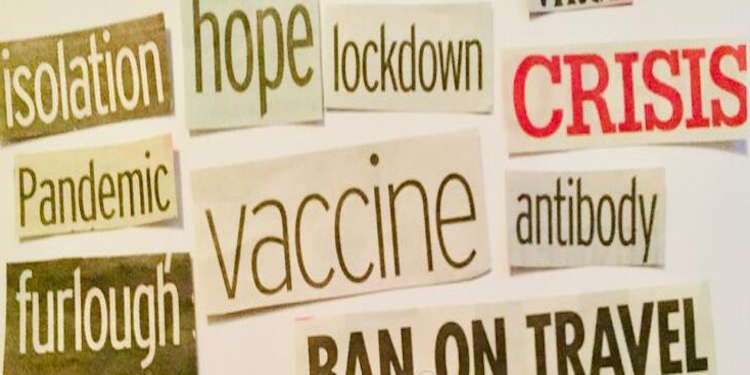
Geopolitics and Pandemic 2020
The year 2020 started with a number of geopolitical trends that thretened the global security impacted by developments in emerging technologies, demographic shifts, and socio-cultural factors.
The six trends to watch in 2020 are:
1. Politics of "we" vs. the rest of the world
2. Proliferation of disinformation via various media propaganda
3. International system shifting from unipolar to multipolar
4. Worldwide protest, spartly fueled by rising income and wealth inequality and facilitated by social media
5. importance of energy as a significant determinant of states’ foreign and security policies
6. Impacts of Global Pandemic COVID-19
There were escalation in U.S.-Iran tensions. The U.S.-China trade conflict and the strategic rivalry between the two countries, especially in technology.
In recent decades, globalization had created opportunities, reduced poverty, and supported peace for billions of people.But due to international trade war, the 21st century economy is now breaking in two. Developed world countries have become toxically polarized. Climate change matters as never before. We are seeing fragmentation at a global level across a range of dimensions, including ideology, trade and technology. Technology decoupling between the U.S. and China is underway and will force countries and businesses to navigate this evolving landscape.
Cybersecurity is another area of concern. Tensions are elevated between the U.S. and many adversaries such as Iran and North Korea, which have the capability to mount attacks on critical infrastructure and institutions.
2020 will likely to witness to Washington’s continued retreat from multilateralism on a gradual but steady glide path toward moderate isolationism. This pivot away from traditional alliances and norms will continue to challenge and reshape the existing global order. Shifting US foreign policies on everything from trade to aid have created uncertainty, and has contributed to a deceleration in global growth and an acceleration in global insecurity. As Washington increasingly applies a national security lens to protect US interests, other states will gradually do the same throughout 2020 and beyond. 2020 will likely bear witness to American adversaries such as China, Russia, Iran, and even Turkey capitalizing on this US retrenchment to expand their spheres of influence. Russia, Turkey, and Iran fight over the vacuum the US is leaving in the Middle East, in the wake of its departure from Syria and Iraq. The reshaping of the global political environment will prolong market uncertainties, stunt global growth, and inhibit business opportunities in many areas.
The novel coronavirus represents the gravest threat to global health since the 1918 Spanish Flu. How will the pandemic influence the internal politics of Russia, China, and European countries? When a respiratory virus spread in Wuhan, Communist Party officials’ instinct was to hush it up, but then swiftly imposed a quarantine of huge scale and severity. The lockdown worked.
The pandemic’s effect on the world isn’t a conventional attack on government targets or the military. Rather, it’s a widespread and indiscriminate attack on global citizens and the economy. This outbreak has directly impacted the lives of billions of people, making it the most effective model for future terrorist activities and a new model for circumventing the conventions of modern warfare.
Even as COVID-19 was raging in China, the Internet was swarming with conspiracy theories. One was that it was a population control scheme, as humans have become too numerous. It was not clear who was actually behind this “population control.” That is the “beauty” of conspiracy theories — they just seem to float on their own. Another one traced the virus to a Chinese biosecurity laboratory, not far from Wuhan, as part of some bioweapon under development. Yet another conspiracy theory, although debunked by the British authorities, attributed it to China’s 5G rollout in the UK.


Leave a Reply